- Michigan's Premier Skydiving Center
- Call Now: (517) 423-7720
Average Skydiving Heights & Altitudes Explained
Friday, October 30, 2026
- Skydive Tecumseh
- 10/30/26
- 0
- General
Key Takeaways
Skydiving does not automatically prevent you from getting life insurance, but insurers may treat it as a higher-risk hobby when determining eligibility, premiums, or policy exclusions. The most important step is to disclose skydiving accurately when applying for coverage and then review the finished policy for any exclusions or riders that address the activity. A policy that excludes skydiving may not provide a death benefit for a skydiving-related accident, while another policy may cover it. If you already have life insurance, check your policy documents or ask your insurer directly rather than assuming your coverage applies.
Three miles above Michigan, the world looks a little different. Roads become ribbons, lakes sparkle in the distance, and the landscape stretches toward the horizon. Then the airplane door opens, the wind rushes in, and the ground suddenly feels a very long way away.
If you’re planning your first jump, you might be wondering how high you’ll climb before making that leap. The answer depends on the dropzone and the jump you choose. Here’s what to know about skydiving heights, freefall time, and the experience at Skydive Tecumseh.
Skydiving Heights: How High Do You Skydive From?
The typical skydiving height falls somewhere between 10,000 and 14,000 feet above sea level, depending on the operation and how altitude is measured. That’s roughly 1.9 to 2.7 miles above the ground!
So, how high do you skydive from at Skydive Tecumseh? You can choose from three jump altitudes:
- 9,000 feet: Big views with a shorter freefall experience.
- 14,000 feet: A popular option for a classic skydiving experience.
- 18,000 feet: An extended freefall experience with additional high-altitude procedures.
These options give you flexibility when planning your jump. If you’ve been researching skydiving heights, the biggest distinction to understand is that your exit altitude affects how much distance you fall before your parachute opens.
When Does the Parachute Open?
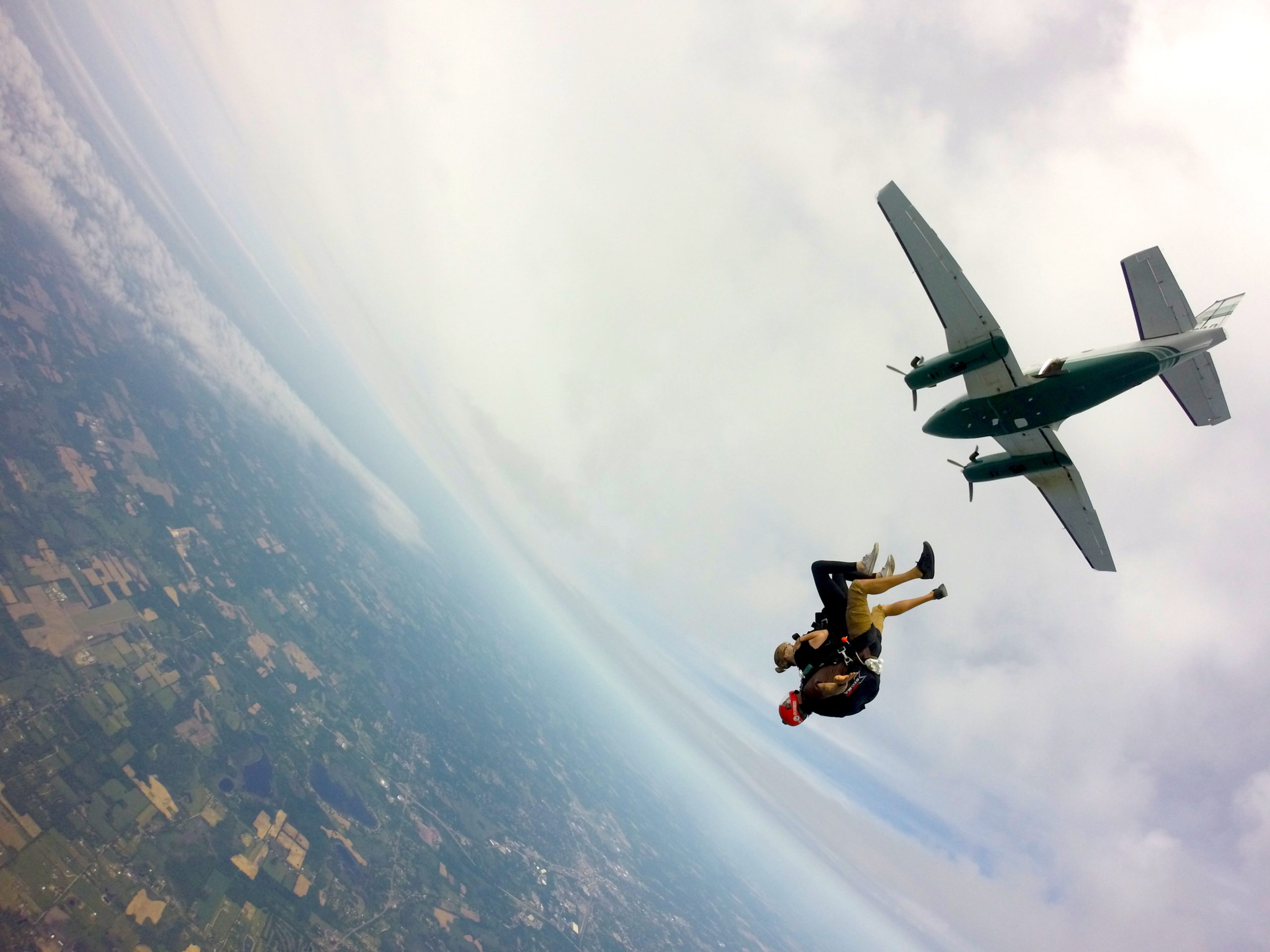
Most tandem instructors pull the parachute anywhere between 5,000 and 6,000 feet above ground level (AGL). The United States Parachute Association’s (USPA) minimum container opening altitude above the ground for tandem jumps is 5,000 feet AGL, whereas a licensed skydiver may pull their parachute closer to 2,500 feet AGL.
Skydiving Altitudes and Freefall Times
One of the biggest differences between skydiving heights is how much time you can spend in freefall before the parachute opens. A higher exit generally allows for a longer freefall, though actual times vary based on the jump, body position, and deployment altitude.
| Exit Altitude | Approximate Freefall Time |
| 9,000 feet | 20 to 30 seconds |
| 14,000 feet | 45 to 60 seconds |
| 18,000 feet | 60 to 90 seconds |
What Determines Your Skydiving Altitude?
Your typical skydiving height depends on several practical factors.
The Aircraft
Different aircraft engines have different operating capabilities and climb rates. For example, a piston-engine plane (such as a Cessna 182) usually has the capability to reach 10,000 feet, whereas a turbine-engine plane (such as a Twin Otter or King Air) has the ability to climb beyond 14,000 feet. Skydive Tecumseh operates King Air and PAC 750XL aircraft, which support the dropzone’s various jump options.
The Type of Jump
Tandem skydives, solo student jumps, and jumps by experienced licensed skydivers can follow different requirements. Not every altitude is available for every type of jump. “Hop ‘n Pops” are a great example of these special types of jumps, as they are only performed by student or licensed skydivers at lower altitudes between 3,500 and 5,500 feet. There is essentially no freefall time as the parachute is deployed almost immediately upon leaving the plane.
The Dropzone
Each skydiving center also sets its available jump altitudes based on the airspace restrictions, operating procedures, and the experience it provides. The Federal Aviation Administration (FAA) sets strict parameters based on where the dropzone is physically located. If a dropzone is near major commercial hubs or military operations, Air Traffic Control (ATC) may cap their altitude to keep skydivers separated from other aircraft flying nearby to reduce the risk of mid-air collisions.
Altitude is one part of planning a skydive, alongside scheduling, training or tandem arrangements, and the conditions on the day.
Choosing Between 9,000, 14,000, and 18,000 Feet
The right altitude option depends on what you want from your skydiving experience.
- 9,000 feet: A lower exit means a shorter freefall than the higher-altitude options. It may suit someone who prefers a more compact experience or is looking for a more budget-friendly option.
- 14,000 feet: This is a common recreational skydiving altitude and offers a longer freefall than a 9,000 foot exit. For many first-time tandem skydivers, it provides a substantial amount of time in freefall without choosing the highest available altitude option.
- 18,000 feet: If you want more time in freefall, a higher exit offers the longest estimated freefall of these three choices. An 18,000 foot skydive also comes with additional considerations for the climb, including supplemental oxygen procedures.
There isn’t one universally best altitude. Consider the estimated freefall time, the package details, and any additional requirements when deciding which option fits your plans.
What to Expect on an 18,000 Foot Skydive
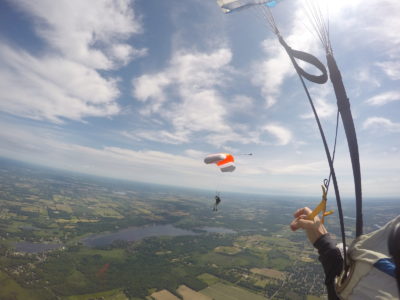
Skydiving from 18,000 feet involves a higher climb than a typical recreational jump, so the time in the aircraft and the procedures before exit may differ.
Supplemental oxygen is an important consideration at this altitude. FAA and USPA rules require oxygen for aircraft occupants when the cabin altitude is above 15,000 feet mean sea level (MSL), and operators follow the applicable requirements and procedures for their flights.
Conditions can also feel much colder at this altitude than they would on a typical skydive – about 3.5 ℉ for every 1,000 feet of elevation. Once you exit, you’ll experience the rush of freefall for a solid minute and a half before the parachute opens and the pace totally changes as you glide above the Earth.
Skydiving Altitude FAQs
How long does a 10,000 foot skydive last?
A 10,000 foot skydive typically provides around 30 seconds of freefall. The exact duration depends on body position, deployment altitude, and jump conditions. The complete experience lasts longer because it also includes the five to seven minute parachute ride and landing.
Is a 15,000 foot skydive high?
Yes, 15,000 feet is a high-altitude jump. Supplemental oxygen requirements and procedures become especially important at these heights.
Can you skydive from 3,000 feet?
Yes, jumps from 3,000 feet are possible in certain training and specialized contexts. However, they offer considerably less freefall time and aren’t the standard tandem experience most first-time jumpers book. These types of jumps are used by licensed or student skydivers practicing parachute flight training, accuracy landings, and canopy control. The mandatory deployment minimum is usually set at 2,500 feet.
Can You Skydive From 50,000 Feet?
Specialized jumps from 50,000 feet are possible, but they’re far beyond ordinary recreational skydiving. They require specialized equipment, oxygen systems, training, and extensive planning. For perspective, the highest skydives in history include record-setting jumps from altitudes exceeding 100,000 feet.
Your View From Up Here Awaits
Whether you’re drawn to the thrill of freefall or curious about what the view looks like from thousands of feet up, your skydiving adventure starts with choosing your jump. Check out Skydive Tecumseh’s available packages, choose your altitude, and book your jump! Blue skies!
Great experience!! This was my third time doing a tandem jump but first time with Skydive Tecumseh. Being able to jump from 18,000 feet was awesome! Plane ride up is quick and comfortable. Instructors were friendly and professional. If you're thinking about...just do it!!
Tara Geror
Copyright © 2026, Skydive Tecumseh, All Rights Reserved.
DropZone Web Design & Marketing by Beyond Marketing, LLC